

Wayfinding isn’t just a sign on a wall. It’s a coordinated system that helps people navigate through and around a space. When it’s done well, nobody notices it. When it’s missing or poorly planned, everyone notices.
We design and build complete wayfinding systems that orient visitors, point them in the right direction, and keep things running smoothly. From a single directory sign in a lobby to a full campus-wide system with hundreds of signs, we handle the planning, design, fabrication, and installation.
A proper wayfinding system uses four categories of signs, each with a different job:
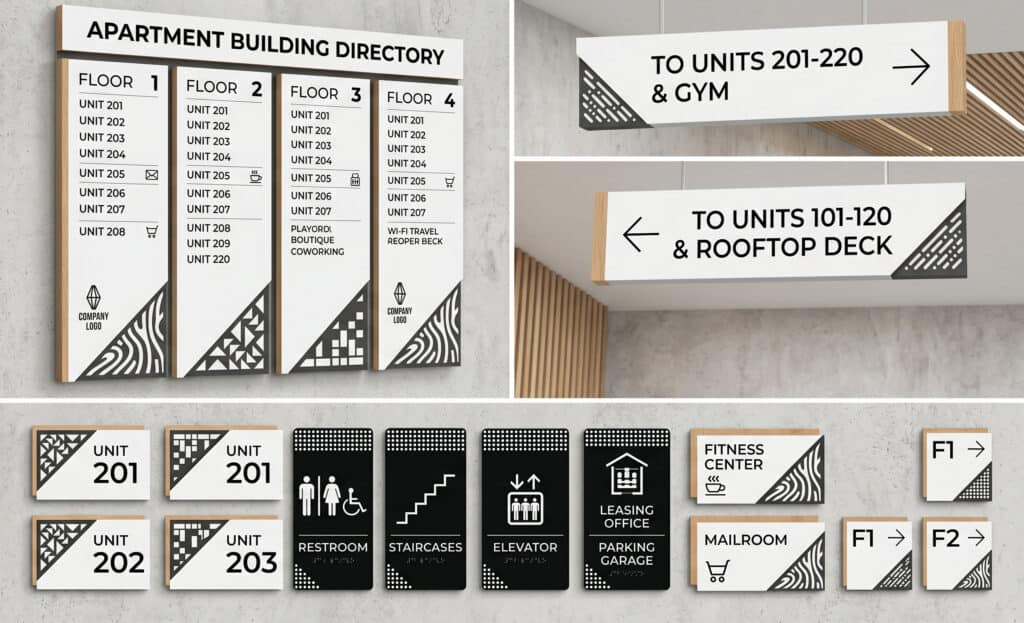
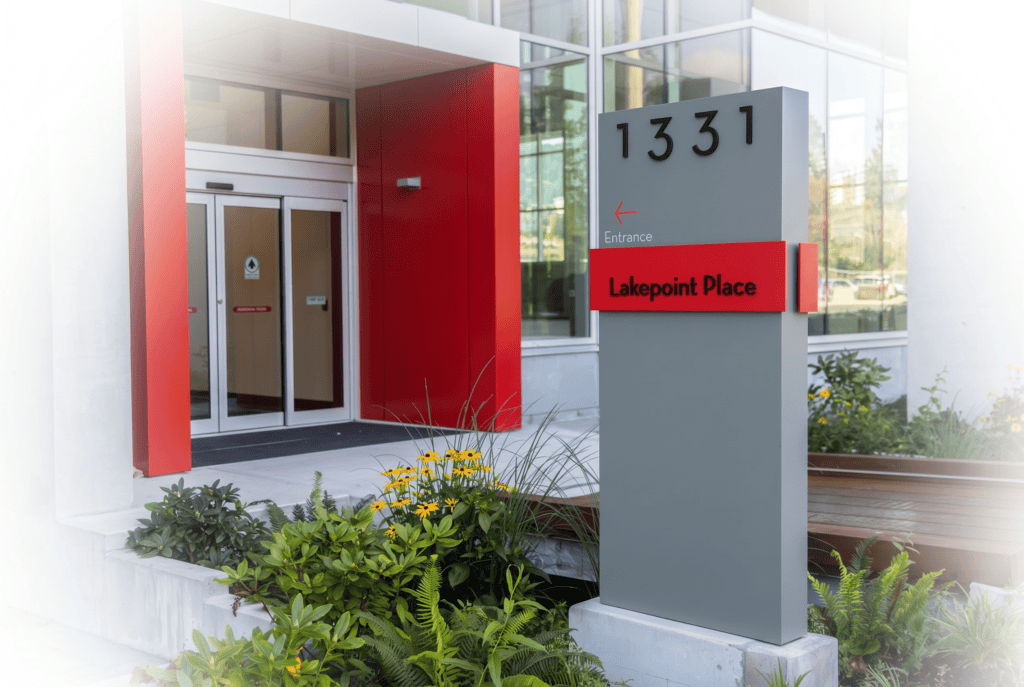
Identification Signs — Tell people where they ARE. Room numbers, department names, building names, floor identifiers. Placed beside doors, at entrances, and at destinations.
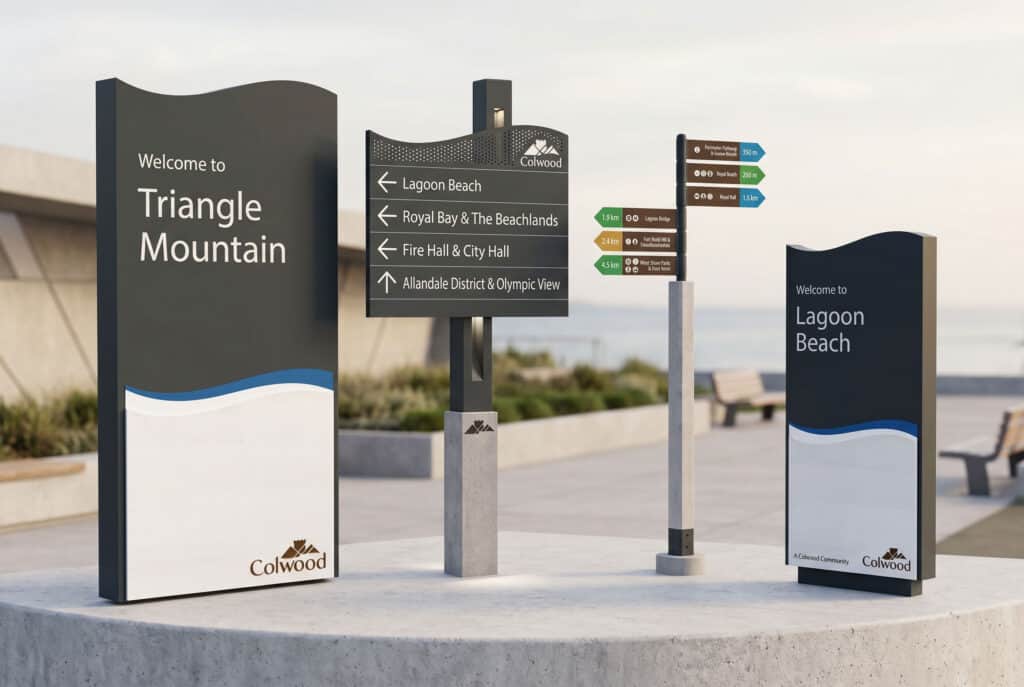
Directional Signs — Tell people where to GO. Arrows, pointers, and distance markers. Placed at decision points like hallways, intersections, and parking lots.
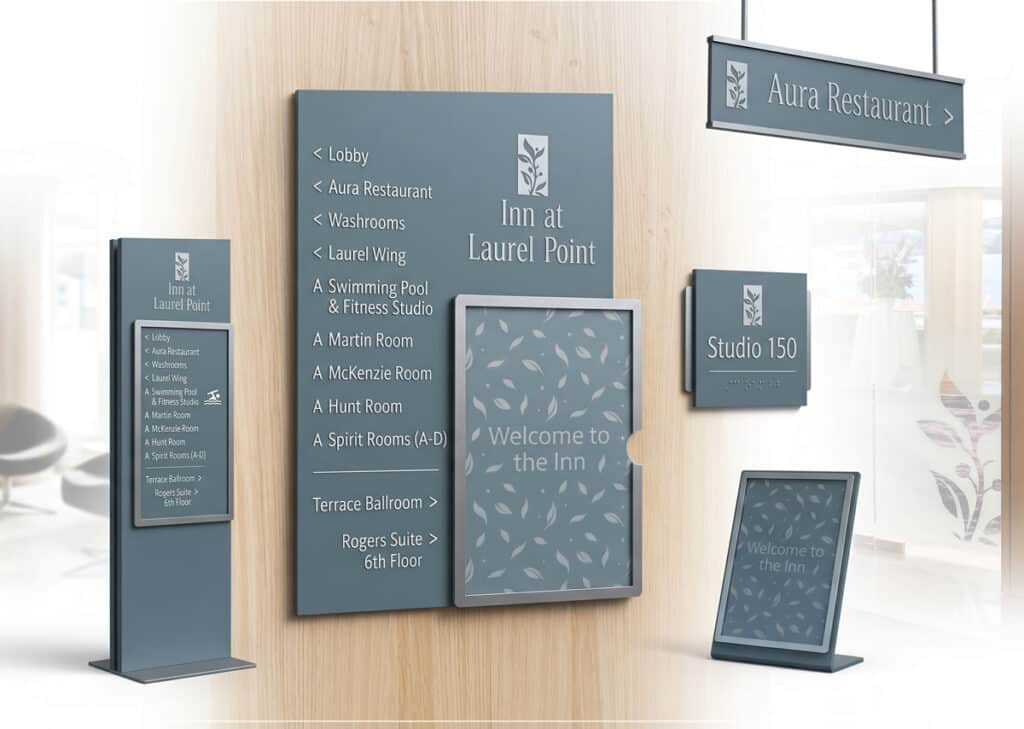
Informational Signs — Give people the big picture. Directories, maps, and “You Are Here” displays. Placed in lobbies, entrances, and central gathering points.
Regulatory Signs — Tell people the rules. No smoking, speed limits, restricted areas, emergency exits, fire routes. Required by law or policy.
Interior wayfinding covers hospitals, office buildings, schools, shopping centres, recreation facilities, and hotels. Signs are wall-mounted, ceiling-hung, or projecting blade signs that stick out perpendicular from the wall so you can read them coming down a hallway.
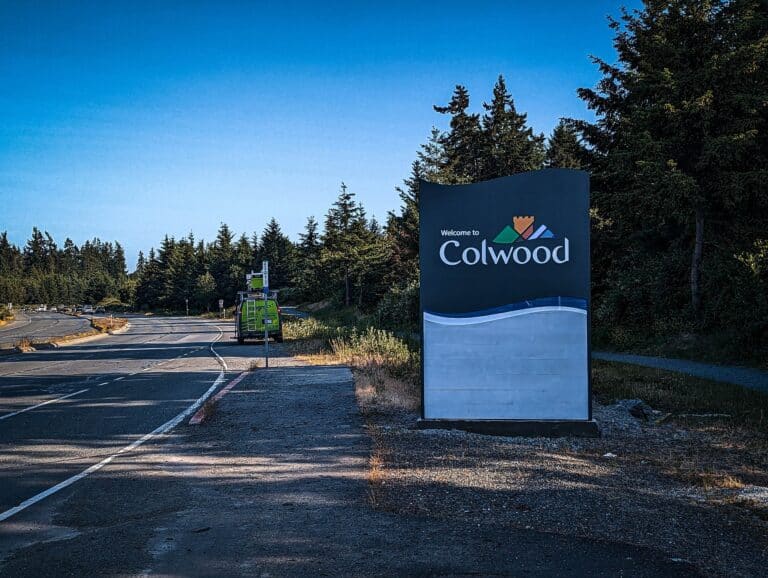
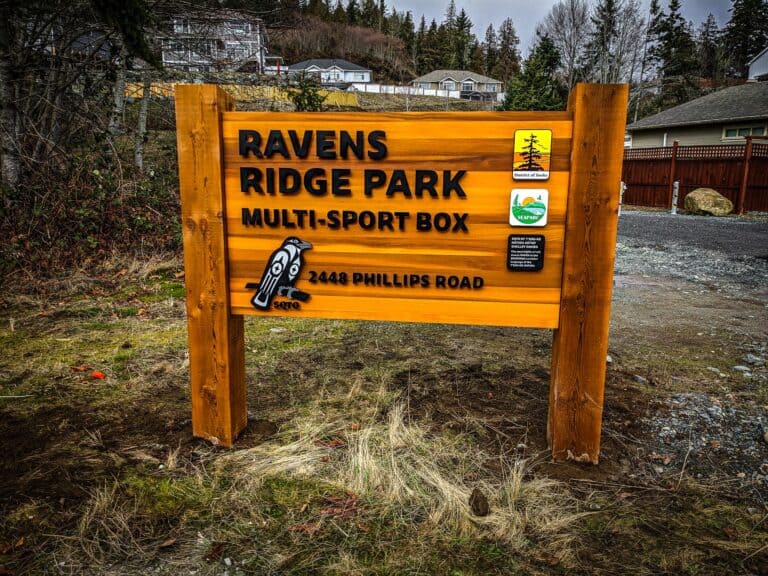
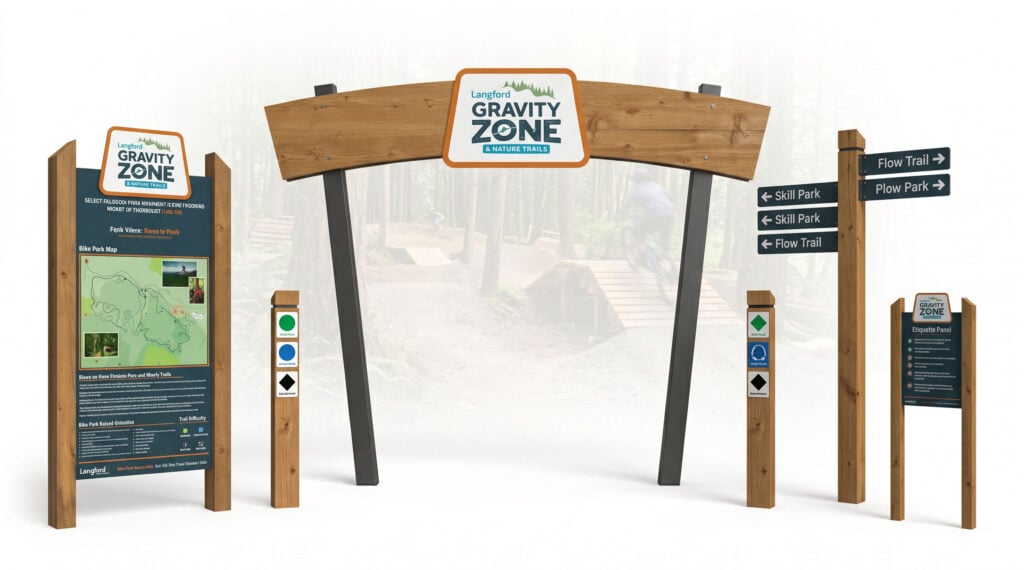
Exterior wayfinding covers campuses, parks, residential developments, business complexes, and downtown districts. Materials are built to handle Vancouver Island’s rain and coastal air. Post-mounted, ground-mounted, or attached to existing structures.
The key to a good system is consistency. A unified design language across both interior and exterior signs — same colours, fonts, icons, and materials — so the experience feels seamless from the parking lot to the third floor.
Canadian accessibility standards require specific features on wayfinding and identification signs. This isn’t a suggestion — it’s part of the building code and national standards (CAN-ASC).
Braille — Signs of 10 words or fewer need Unified English Braille. This covers most room signs, floor identifiers, and washroom signs.
Tactile characters — Raised letters that can be read by touch. Must be sans serif, not italic or decorative, between 16mm and 50mm tall, with at least 70% contrast between the letter colour and background.
No sharp or abrasive edges — Tactile signs need to be safe to touch, which affects material and finishing choices.
We build signs that meet the current standards so you don’t run into compliance issues after installation. If you’re not sure what your building requires, we can help sort that out.